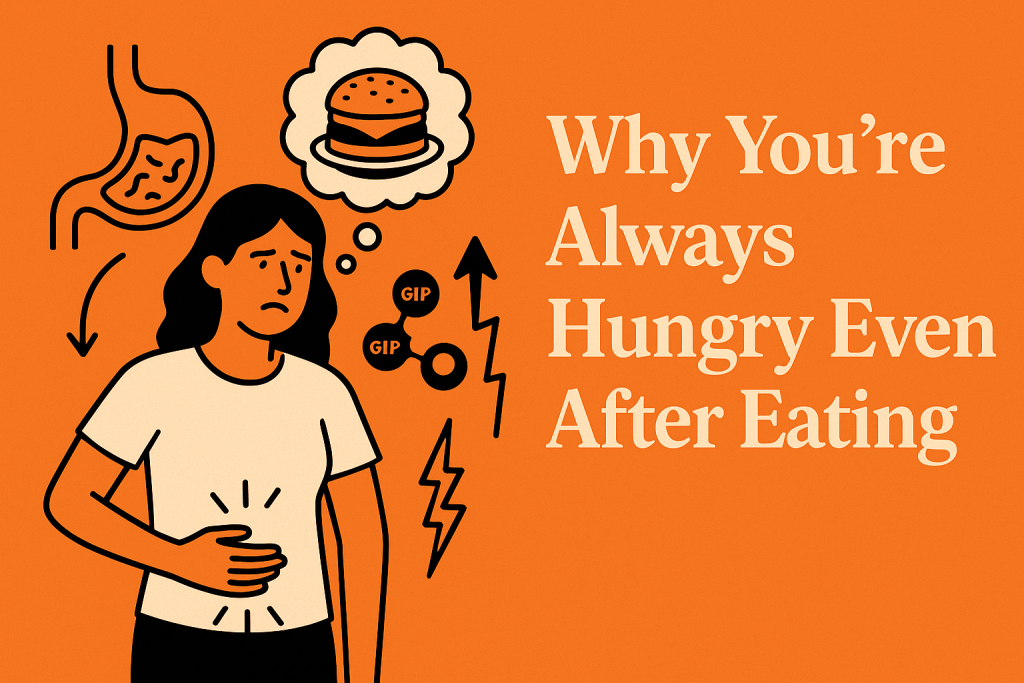
You finish a meal. You’re full. And yet, an hour later, you’re thinking about food again.
If this sounds familiar, you’re not alone. Feeling hungry even after eating is one of the most common and frustrating issues people face today. And contrary to popular belief, it’s not because you’re weak, greedy, or doing something wrong.
Most of the time, it’s about how your body signals hunger, not how much food you’re eating.
Hunger Isn’t Just About Food Quantity
Many people assume hunger means they didn’t eat enough. But hunger is controlled by a complex network of hormones, blood sugar signals, and brain responses.
You can eat a large meal and still feel unsatisfied if those signals aren’t aligned.
That’s why modern weight and metabolic research focuses less on portion sizes and more on appetite regulation.
Blood Sugar Swings Can Trigger Hunger Quickly
One of the biggest reasons hunger returns so fast after meals is unstable blood sugar.
Meals high in refined carbs or sugar can cause blood glucose to rise quickly. In response, insulin is released to bring levels down. When that drop happens too fast, the brain interprets it as an energy shortage.
The result:
- Sudden hunger
- Cravings for sugar or carbs
- Fatigue or brain fog
Even though you just ate, your body is signaling for more fuel.
Protein and Fiber Matter More Than You Think
Meals lacking sufficient protein or fiber tend to digest quickly. This leads to less stimulation of satiety hormones and a faster return of hunger.
Protein and fiber help:
- Slow digestion
- Activate fullness signals
- Stabilize blood sugar
- Reduce rapid hunger rebound
Without them, hunger often comes back much sooner than expected.
Hunger Hormones Can Be Out of Sync
Hormones like GLP-1, GIP, and leptin play major roles in appetite control. When these signals are working properly, your brain gets a clear message that you’ve eaten enough.
However, stress, poor sleep, insulin resistance, and repeated dieting can weaken these signals.
This can lead to:
- Feeling hungry shortly after meals
- Difficulty feeling satisfied
- Constant thoughts about food
In these cases, eating more doesn’t solve the problem because the signal itself is disrupted.
Stress Can Make Hunger Worse
Stress raises cortisol levels, which can directly influence appetite and cravings.
Under stress, the body prioritizes quick energy. This often shows up as cravings for fast, high-energy foods even when calorie needs are met.
This is why people often feel hungrier during busy, anxious, or emotionally demanding periods.
Why Dieting Often Makes Hunger Worse
Aggressive calorie restriction can increase hunger hormones while reducing satiety signals.
Over time, the body adapts by:
- Increasing appetite
- Slowing metabolic efficiency
- Making hunger feel more urgent
This is one reason why repeated dieting often leads to stronger hunger signals rather than better control.
Appetite Control vs Eating More
If hunger is driven by hormonal signals, simply eating more food isn’t always the answer.
Modern research looks at how appetite is regulated, not just how much food is consumed. Stabilizing hunger signals helps reduce the constant urge to eat without relying on willpower.
This is where advanced metabolic research, including compounds studied for their role in appetite signaling such as Tirzepatide 20mg, is often discussed in scientific contexts around hunger regulation and metabolic balance.
Signs Your Hunger Is Signal-Based, Not Calorie-Based
You may be dealing with signal-driven hunger if:
- You feel hungry soon after balanced meals
- Cravings are frequent and intense
- Energy crashes drive snacking
- Hunger feels urgent rather than gradual
These signs point toward disrupted appetite signaling rather than a simple lack of food.
What Can Help Reduce Constant Hunger
While research continues to evolve, some habits can support better appetite regulation:
- Eating balanced meals with protein, fiber, and healthy fats
- Avoiding long gaps followed by very large meals
- Managing stress and sleep
- Paying attention to how different foods affect hunger
These steps don’t replace metabolic research, but they help create a more stable baseline.
The Bigger Picture
Being hungry all the time isn’t a personal failure. It’s a signal.
In a world filled with stress, processed food, and constant stimulation, hunger signals can become distorted. Understanding why this happens is the first step toward managing it more effectively.
As metabolic science continues to advance, the focus is shifting toward regulating appetite signals instead of fighting them. That shift is changing how hunger, energy, and long-term weight management are understood.