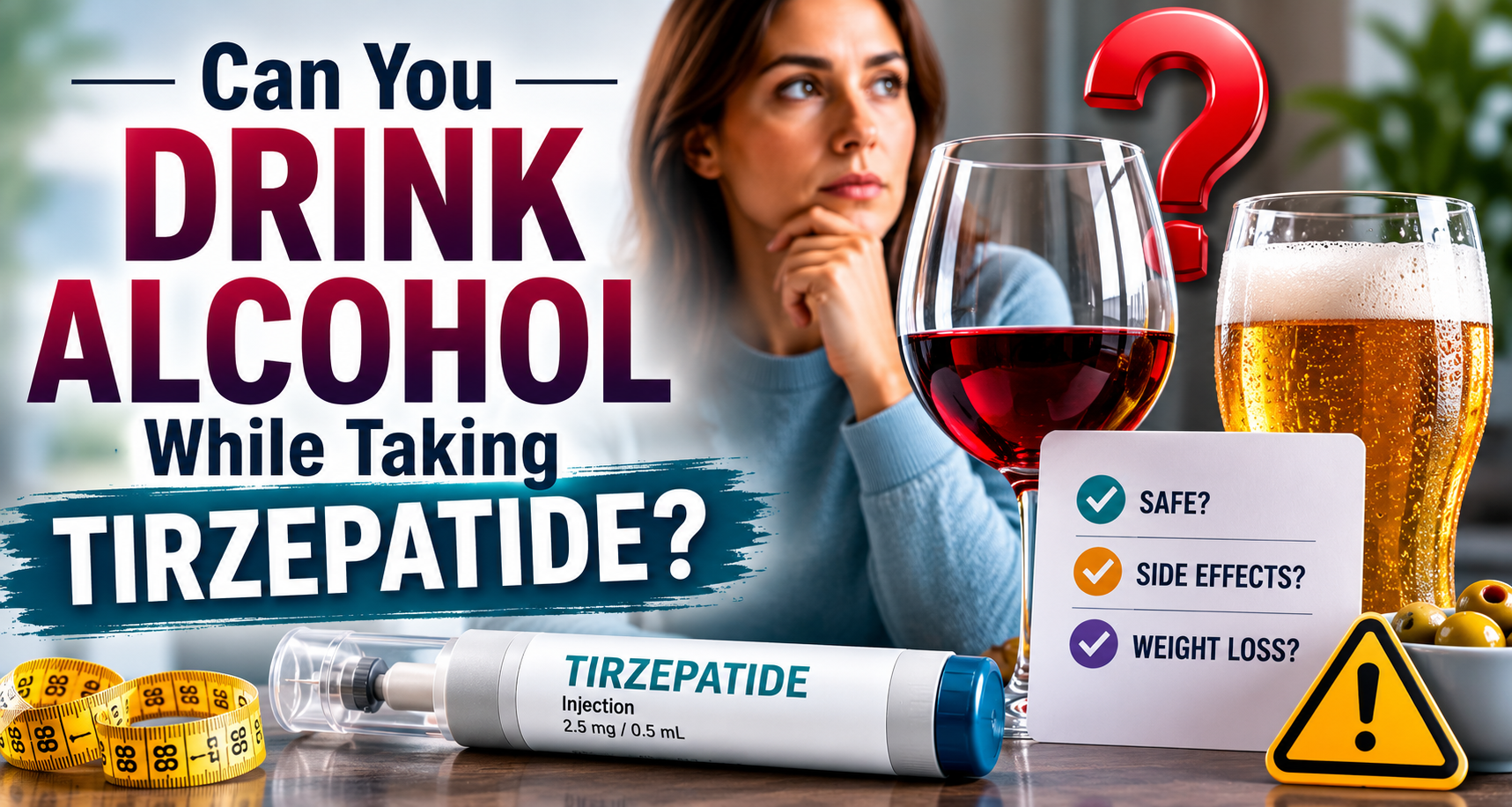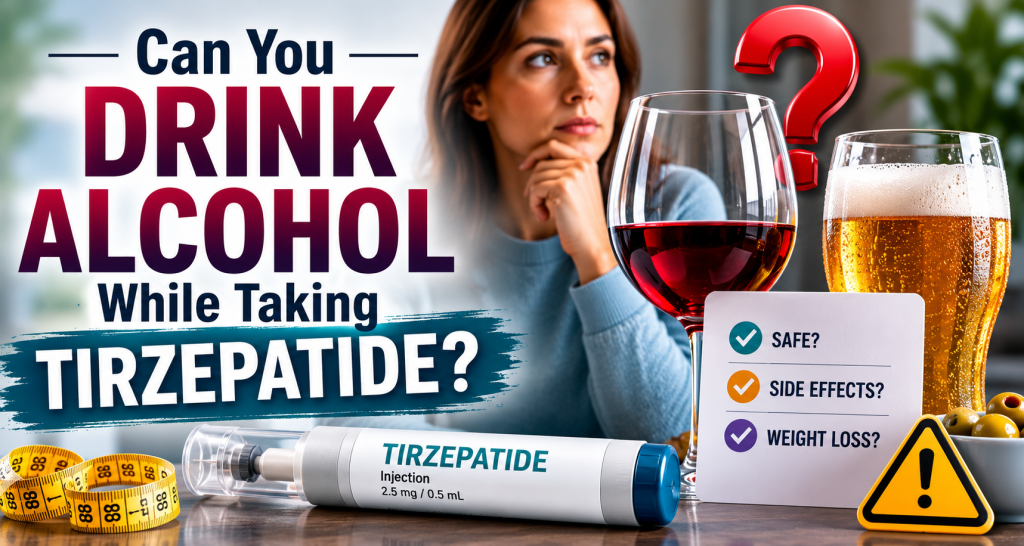
If you’re taking tirzepatide for weight management, you may be wondering whether it’s safe to enjoy a glass of wine, a pint, or your favourite cocktail.
The good news is that alcohol isn’t specifically prohibited while taking tirzepatide. However, combining the two may increase the likelihood of certain side effects, particularly nausea, dehydration and dizziness. Alcohol can also make it more difficult to achieve your weight loss goals if consumed regularly or in large amounts.
So, can you drink alcohol while taking tirzepatide?
For many people, drinking alcohol in moderation may be possible, but it should be approached with caution. Your tolerance may change after starting tirzepatide, and some people find they simply don’t enjoy alcohol as much as they did before treatment.
How Does Tirzepatide Work?
Tirzepatide is a once-weekly injectable medication that activates both the GLP-1 and GIP hormone receptors.
These hormones help to:
- Reduce appetite.
- Increase feelings of fullness.
- Slow stomach emptying.
- Improve blood sugar regulation.
Because food and drink remain in the stomach for longer, some people notice that alcohol affects them differently after starting treatment.
Is It Safe to Drink Alcohol While Taking Tirzepatide?
For most adults, there is no known direct interaction that means alcohol must be completely avoided while taking tirzepatide.
However, both alcohol and tirzepatide can affect the digestive system, hydration and blood sugar. Combining them may increase certain side effects, particularly during the first few weeks of treatment or after a dose increase.
If you choose to drink, moderation is generally the safest approach.
Why Alcohol May Feel Different on Tirzepatide
Many people report that alcohol affects them differently after starting GLP-1 medications.
Although everyone’s experience is unique, you may notice:
- Feeling full more quickly.
- Drinking less than usual.
- Increased nausea.
- Reduced enjoyment of alcohol.
- Feeling intoxicated sooner than expected.
Research into exactly why this happens is ongoing, but slower stomach emptying and changes in appetite may play a role.
Can Alcohol Make Tirzepatide Side Effects Worse?
Yes, it can.
Common side effects of tirzepatide include:
- Nausea.
- Vomiting.
- Diarrhoea.
- Constipation.
- Indigestion.
- Stomach discomfort.
Alcohol, particularly in larger amounts, may worsen many of these symptoms.
If you’ve recently started tirzepatide and are still adjusting to treatment, it may be sensible to avoid alcohol until you know how your body responds.
Can Alcohol Slow Weight Loss?
Potentially.
Alcohol contains calories but provides very little nutritional value.
For example:
- A pint of lager may contain around 180 to 250 calories.
- A large glass of wine can contain around 200 calories.
- Cocktails are often significantly higher because of added sugar.
These extra calories can make it more difficult to maintain the calorie deficit needed for weight loss.
Alcohol may also:
- Lower your motivation to make healthy food choices.
- Increase cravings for high-calorie foods.
- Make portion control more difficult.
- Reduce physical activity the following day.
An occasional drink is unlikely to undo your progress, but regular heavy drinking may reduce the overall effectiveness of your weight loss efforts.
Can Alcohol Increase the Risk of Low Blood Sugar?
For people taking tirzepatide alone for weight management, the risk of low blood sugar is generally low.
However, alcohol can affect blood sugar levels, particularly if consumed on an empty stomach.
The risk may be higher in people with diabetes who also use insulin or certain other diabetes medications.
If you have diabetes, follow the advice provided by your healthcare team regarding alcohol consumption.
Does Tirzepatide Change Alcohol Tolerance?
It might.
Some people report:
- Feeling drunk more quickly.
- Losing interest in alcohol.
- Becoming full after fewer drinks.
- Experiencing stronger hangovers.
Others notice very little difference.
Individual responses vary, so it’s wise to be cautious the first few times you drink after starting tirzepatide.
Tips for Drinking Alcohol While Taking Tirzepatide
If you decide to drink, these tips may help reduce discomfort:
- Keep your intake moderate.
- Avoid drinking on an empty stomach.
- Drink water between alcoholic drinks.
- Choose lower-sugar drinks where possible.
- Eat balanced meals throughout the day.
- Stop drinking if you begin to feel nauseous.
Many people also find it helpful to avoid alcohol on the day of their weekly injection if side effects are usually strongest at that time.
When Should You Avoid Alcohol?
It may be best to avoid alcohol if you are:
- Experiencing significant nausea or vomiting.
- Severely dehydrated.
- Unable to eat normally because of side effects.
- Recovering from stomach-related complications.
- Advised by your healthcare professional not to drink.
Frequently Asked Questions
Can I have a glass of wine while taking tirzepatide?
For many people, yes. A small amount of alcohol may be acceptable, but it’s important to monitor how your body responds and drink in moderation.
Can I drink beer on tirzepatide?
Yes, although beer contains calories and may contribute to bloating or feelings of fullness. Drinking in moderation is generally recommended.
Will alcohol stop tirzepatide from working?
No. Alcohol doesn’t stop tirzepatide from working. However, drinking heavily can make it harder to maintain healthy eating habits and may reduce your overall weight loss progress.
Should I skip my tirzepatide injection if I’m drinking alcohol?
No. Do not change your medication schedule unless advised to do so by your healthcare professional.
Final Thoughts
Alcohol isn’t completely off limits while taking tirzepatide, and many people are able to enjoy an occasional drink without any major problems.
That said, tirzepatide can change the way your body responds to alcohol. Some people feel full more quickly, experience more nausea, or simply lose interest in drinking altogether.
If you choose to drink, moderation is key. Staying hydrated, avoiding alcohol on an empty stomach, and paying attention to how your body responds can help reduce the risk of unwanted side effects while supporting your weight loss goals.