At some point during their weight loss journey, a lot of people start wondering the same thing:
“Should I switch from Semaglutide to Tirzepatide?”
Sometimes the reason is stalled progress. Sometimes it’s side effects. Sometimes people simply hear others talking about better results with Tirzepatide and get curious.
And honestly, that curiosity makes sense.
Both medications belong to the GLP 1 family and both are widely discussed in the world of weight management, appetite control, and metabolic health. But they do work differently, and for some people, that difference matters quite a bit.
Still, switching medications is not something to treat casually like changing coffee brands because your usual one tasted slightly weird on Tuesday morning.
There are a few important things people should understand before making the move.
Why Some People Consider Switching
The most common reason is simple.
They feel like Semaglutide stopped working as effectively as it once did.
In the beginning, many people experience:
- reduced appetite
- fewer cravings
- steady weight loss
- better portion control
But after several months, progress can sometimes slow down. Weight loss plateaus are extremely common, even with GLP 1 medications.
That’s usually when people start hearing more about Tirzepatide.
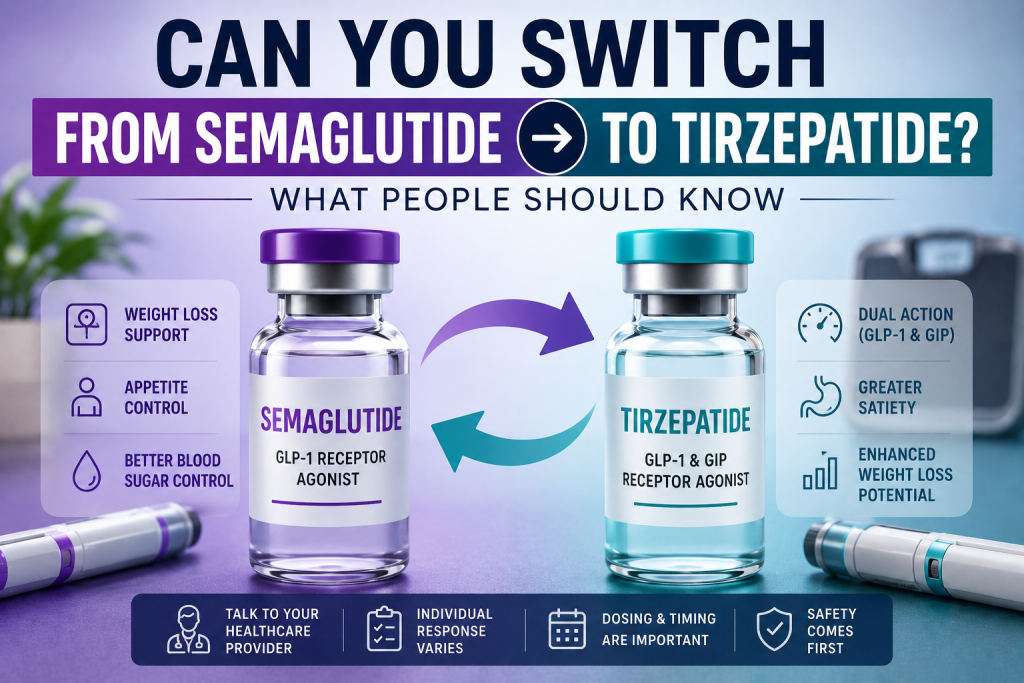
Some are attracted to reports of stronger appetite suppression. Others are interested in the dual action mechanism involving both GLP 1 and GIP receptors.
And then there’s social media, where every third person suddenly claims Tirzepatide transformed them into a completely different human being in twelve weeks. The internet occasionally behaves like a late night infomercial with WiFi.
The Main Difference Between Semaglutide and Tirzepatide
Semaglutide mainly works by targeting GLP 1 receptors.
Tirzepatide targets both:
- GLP 1 receptors
- GIP receptors
That additional GIP activity is one reason researchers believe Tirzepatide may produce greater average weight loss for some individuals.
For certain people, this can translate into:
- stronger appetite control
- reduced food cravings
- improved blood sugar regulation
- greater feelings of fullness
But none of this guarantees identical results for everybody.
Human metabolism is not a vending machine where you insert one medication and receive the exact same outcome every time.
Can People Actually Switch?
Yes, many people do switch from Semaglutide to Tirzepatide under medical supervision.
However, the transition usually needs to be approached carefully.
These medications affect appetite, digestion, blood sugar, and gastrointestinal function. Moving too aggressively with dosing can increase the risk of unpleasant side effects.
That’s why healthcare providers often recommend:
- gradual dose adjustments
- proper timing between medications
- monitoring side effects closely
- individualized treatment plans
This is not something people should freestyle based on a random Reddit comment written by someone named “GymDragon92.”
Reasons Someone Might Switch
Weight Loss Has Stalled
This is probably the biggest reason.
A plateau does not necessarily mean Semaglutide has “failed,” but some people feel their appetite suppression weakens over time or their progress slows significantly.
For certain individuals, Tirzepatide may help restart momentum.
Side Effects Feel Difficult
Interestingly, some people tolerate Tirzepatide better while others tolerate Semaglutide better.
Common side effects for both may include:
- nausea
- bloating
- constipation
- diarrhea
- stomach discomfort
The body’s response can vary dramatically from person to person.
Stronger Appetite Suppression
Many users report that Tirzepatide quiets “food noise” more effectively for them.
That constant mental chatter about snacks, cravings, and eating may feel reduced in some cases, making calorie control easier.
What People Should Expect After Switching
One thing people often expect is instant dramatic results.
That does happen occasionally, but not always.
Some people notice:
- reduced appetite fairly quickly
- better fullness after meals
- renewed weight loss progress
Others experience:
- temporary side effects
- adjustment periods
- slower than expected changes
The body usually needs time to adapt.
It’s also important to remember that medication alone rarely carries the entire journey.
Nutrition, hydration, sleep, stress, activity levels, and consistency still matter massively.
Does Tirzepatide Always Lead to More Weight Loss?
Not necessarily.
Research has shown impressive average results with Tirzepatide, but averages do not tell the full story.
Some people respond incredibly well to Semaglutide and see no reason to switch.
Others may switch and discover that Tirzepatide feels significantly more effective for appetite control and satiety.
There’s no universal winner that works best for every human body.
Lifestyle Still Matters More Than People Want to Admit
This part usually annoys people because everyone wants the medication to do all the heavy lifting.
But lifestyle habits still play a major role.
Someone who:
- prioritizes protein
- stays hydrated
- sleeps properly
- moves consistently
- manages emotional eating
will generally see better long term results regardless of which medication they use.
The medication can make the process easier, but it doesn’t replace foundational habits completely.
Switching Is Not a Shortcut
This is important.
Some people constantly chase the “stronger” medication hoping it will magically solve every problem overnight.
But if someone struggles with:
- binge eating patterns
- poor sleep
- high stress
- inconsistent eating habits
- lack of movement
switching medications alone may not completely change outcomes.
Sometimes the bigger issue is sustainability rather than medication strength.
Final Thoughts
Switching from Semaglutide to Tirzepatide is something many people consider during their weight loss journey, especially if progress slows or appetite control feels weaker over time.
For some individuals, Tirzepatide may provide stronger appetite suppression and greater weight loss support. For others, Semaglutide continues working perfectly well.
There’s no one size fits all answer because metabolism, hormones, side effect tolerance, and lifestyle habits vary enormously from person to person.
The most important thing is approaching any medication change thoughtfully, realistically, and with proper professional guidance.
And maybe avoiding the temptation to believe every dramatic before and after story floating around online like modern folklore.
Frequently Asked Questions
Can you switch directly from Semaglutide to Tirzepatide?
Some people do transition between the two medications under professional supervision, but timing and dosage adjustments are important.
Is Tirzepatide stronger than Semaglutide?
Tirzepatide works differently because it targets both GLP 1 and GIP receptors, while Semaglutide mainly targets GLP 1 receptors.
Why do people switch from Semaglutide to Tirzepatide?
Common reasons include stalled weight loss, stronger appetite suppression, curiosity about different results, or side effect management.
Will switching medications restart weight loss?
It may help some individuals, especially if appetite control improves, but results vary widely.
Do both medications have similar side effects?
Yes, both can cause gastrointestinal side effects such as nausea, bloating, constipation, or stomach discomfort.