Over the past few years, weight loss medications have completely changed the conversation around obesity, appetite control, and metabolic health.
First, there was huge attention around Semaglutide. Then Tirzepatide started making headlines because of its dual action approach.
Now another name keeps popping up in research discussions, medical articles, online communities, and industry conversations:
Retatrutide.
A lot of people are suddenly asking the same question:
“What exactly is Retatrutide, and why is everyone talking about it?”
The short answer is that researchers are interested because Retatrutide works differently from earlier GLP 1 medications, and early findings have created a lot of curiosity around its potential.
But there’s a little more to the story than just hype and dramatic before and after posts floating around social media.
Retatrutide Works on Three Different Pathways
One of the biggest reasons researchers are paying attention to Retatrutide is because it belongs to a newer category often referred to as triple agonists.
That sounds very sci fi villain laboratory-ish, but the concept itself is fairly simple.
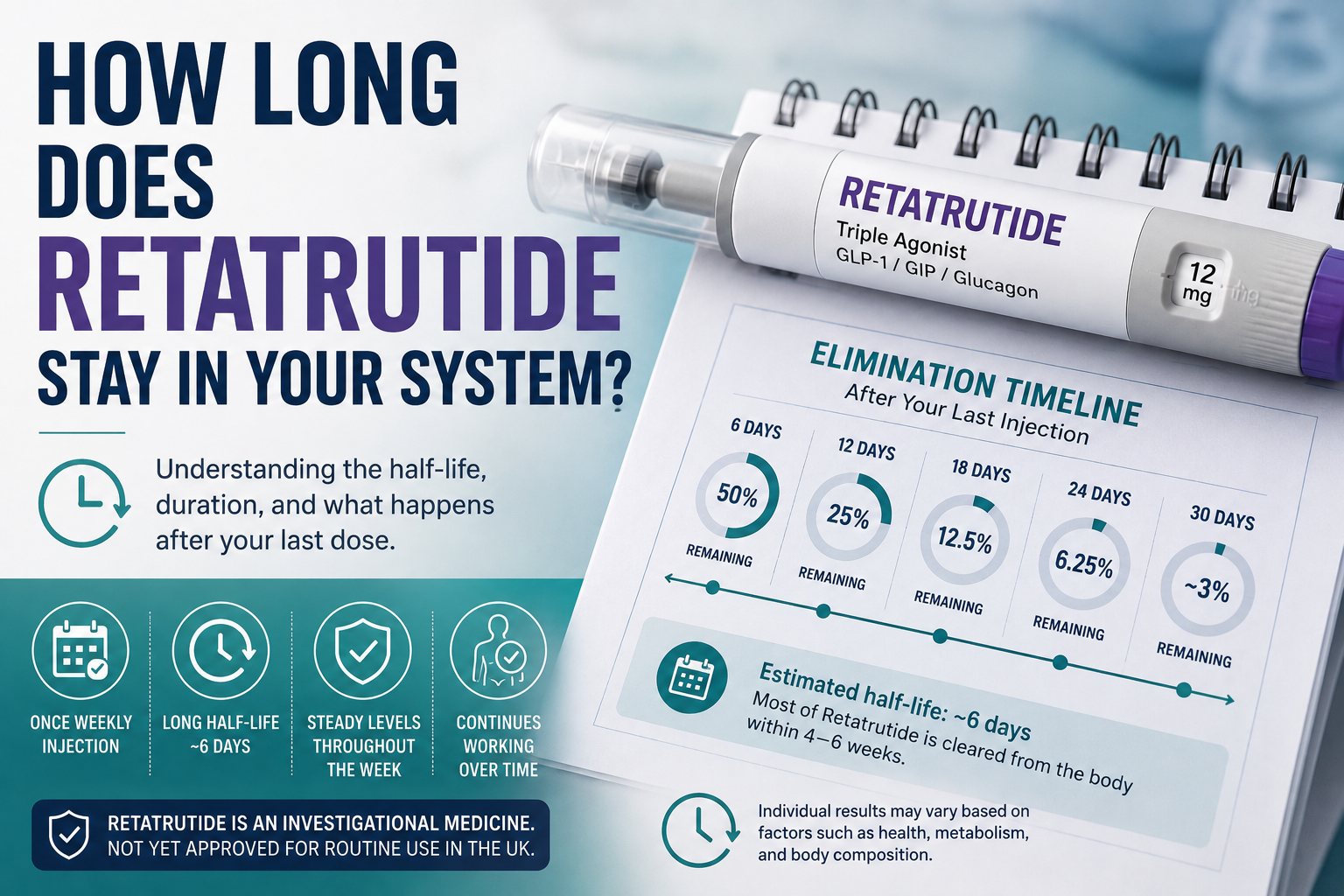
Retatrutide targets:
- GLP 1 receptors
- GIP receptors
- glucagon receptors
This makes it different from:
- Semaglutide, which mainly targets GLP 1
- Tirzepatide, which targets GLP 1 and GIP
Retatrutide adds a third mechanism into the mix.
That third glucagon related activity is one of the main reasons researchers believe it may behave differently from earlier medications.
Why GLP 1 Medications Became So Popular in the First Place
To understand the excitement around Retatrutide, it helps to understand why GLP 1 medications became such a major topic.
These medications gained attention because they may help with:
- appetite control
- feelings of fullness
- blood sugar regulation
- reduced food cravings
- calorie reduction
For many people, that combination made weight management feel more achievable than traditional dieting alone.
Instead of constantly battling hunger every waking hour, some users reported feeling naturally satisfied with smaller portions.
That shift alone changed the conversation around obesity treatment in a massive way.
Researchers Are Curious About the Triple Action Effect
Retatrutide is drawing attention because researchers want to understand what happens when all three pathways work together.
The thinking is that this triple action approach may influence:
- appetite regulation
- satiety
- metabolism
- energy balance
- blood sugar control
This is one reason people sometimes refer to Retatrutide as a “next generation” obesity research medication.
The glucagon related component is especially interesting because glucagon plays a role in energy expenditure and metabolic activity.
In simple terms, researchers are exploring whether this combination may create effects beyond what earlier GLP 1 medications achieved on their own.
Early Research Results Sparked Massive Interest
A huge reason for the growing attention around Retatrutide is that early research findings generated a lot of discussion within the medical and weight management space.
Whenever a medication shows promising early results related to weight management, the internet reacts like someone dropped concert tickets into a crowded shopping mall.
Suddenly:
- headlines appear everywhere
- social media discussions explode
- comparison articles multiply
- people start searching for information nonstop
That is exactly what happened with Retatrutide.
Researchers, clinicians, and everyday readers all became curious about whether triple agonists could represent another major step forward in obesity research.
Appetite Control Is a Major Focus
One area researchers are especially interested in is appetite suppression and satiety.
Many people struggle with:
- constant hunger
- cravings
- emotional eating
- food noise
- difficulty maintaining calorie deficits
Traditional dieting often fails because hunger eventually becomes exhausting.
Research around medications like Retatrutide aims to better understand how hormonal pathways influence appetite and eating behaviour.
For some people, reduced food noise alone can completely change their relationship with eating.
Obesity Research Is Evolving Rapidly
Another reason Retatrutide receives so much attention is because obesity research itself has evolved dramatically in recent years.
For a long time, obesity was oversimplified into:
“Just eat less and move more.”
But researchers now understand that body weight regulation involves:
- hormones
- appetite signalling
- genetics
- metabolism
- insulin sensitivity
- brain reward systems
- environmental factors
- sleep
- stress
That broader understanding has led to much more serious research into medications that target metabolic pathways directly.
Retatrutide fits into this larger shift in thinking.
Researchers Want Better Long Term Outcomes
One of the biggest challenges in weight management has always been sustainability.
Many people lose weight temporarily, only to regain it later because hunger, cravings, and metabolic adaptation eventually push back hard.
Researchers are interested in whether newer medications may help support:
- better long term adherence
- improved appetite control
- more sustainable eating patterns
- long term metabolic improvements
That does not mean any medication is a magic solution.
But it does explain why scientists continue studying newer approaches like Retatrutide so closely.
The Curiosity Around Retatrutide Keeps Growing
Part of the attention is simply human nature.
Whenever something new appears in the health and wellness space, curiosity spreads incredibly fast.
Especially when:
- weight loss is involved
- dramatic stories appear online
- comparisons with existing medications emerge
- early data sounds promising
Some of that curiosity is reasonable.
Some of it becomes exaggerated very quickly.
At times, social media discussions around these medications start sounding less like medical conversations and more like people discussing the newest smartphone launch.
Researchers Still Need More Data
This part is important.
Even though Retatrutide has generated major interest, researchers still need long term data and continued study.
Questions remain around:
- long term outcomes
- side effects
- tolerability
- sustainability
- different patient responses
- real world adherence
That is normal with newer medications and developing research areas.
Science usually moves carefully, even when public excitement moves at lightning speed.
Retatrutide Is Part of a Bigger Shift in Metabolic Medicine
The attention around Retatrutide reflects something larger happening in healthcare right now.
Researchers are increasingly viewing obesity and metabolic dysfunction through a hormonal and biological lens rather than simply treating them as issues of willpower.
That shift is reshaping:
- obesity treatment
- appetite research
- diabetes management
- metabolic health strategies
Retatrutide sits right in the middle of this changing landscape.
Final Thoughts
Researchers are paying so much attention to Retatrutide because it represents a newer approach in metabolic and obesity research.
Its triple action mechanism involving GLP 1, GIP, and glucagon receptors has created major curiosity about how these pathways may work together to influence appetite, satiety, blood sugar, and energy balance.
At the same time, growing public interest in weight management medications has pushed Retatrutide into the spotlight much faster than many older treatments ever experienced.
Still, it is important to separate scientific interest from internet hype.
Research continues, data continues to evolve, and every individual responds differently.
But one thing is clear:
Retatrutide has become one of the most closely watched names in modern obesity and metabolic research.
Frequently Asked Questions
What is Retatrutide?
Retatrutide is an investigational medication being studied for weight management and metabolic health. It targets GLP 1, GIP, and glucagon receptors.
Why is Retatrutide different from Semaglutide?
Semaglutide mainly targets GLP 1 receptors, while Retatrutide targets GLP 1, GIP, and glucagon receptors.
Why are researchers excited about Retatrutide?
Researchers are interested in its triple agonist mechanism and how it may affect appetite, metabolism, and energy balance.
Is Retatrutide stronger than Tirzepatide?
Researchers are still studying Retatrutide, and long term comparisons continue to evolve.
Does Retatrutide reduce appetite?
Research suggests it may influence appetite regulation and feelings of fullness, although individual responses can vary.