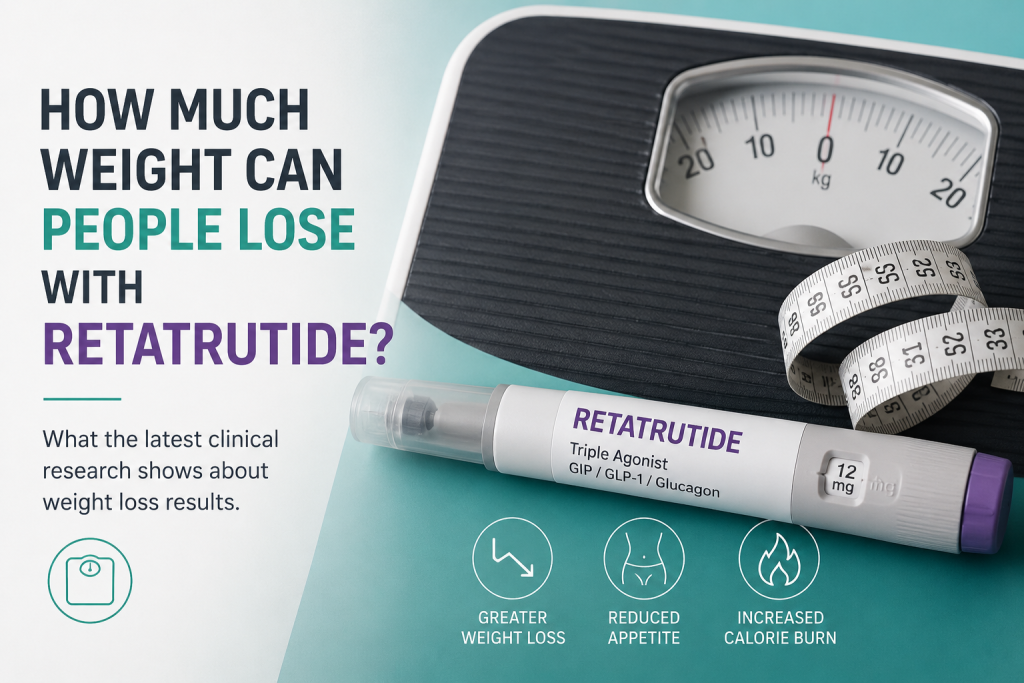
Weight loss medications have advanced rapidly over the past few years, but few have generated as much interest as retatrutide. Early clinical trials suggest it may produce some of the largest average weight reductions seen with an anti obesity medication to date.
So, how much weight can people actually lose with retatrutide?
The short answer is that participants in clinical trials have lost around 19% to over 30% of their starting body weight, depending on the dose used, the duration of treatment, and individual factors. While these results are encouraging, it’s important to remember that retatrutide remains an investigational medicine, and ongoing research continues to evaluate its long term safety and effectiveness.
What Is Retatrutide?
Retatrutide is a once weekly injectable medication developed to help manage obesity and overweight. Unlike earlier GLP-1 medications, retatrutide activates three different hormone receptors:
- GLP-1
- GIP
- Glucagon
This triple hormone approach is designed to reduce appetite, improve feelings of fullness, regulate blood sugar, and increase energy expenditure, potentially leading to greater weight loss than medications targeting one or two pathways alone.
How Much Weight Did People Lose in Clinical Trials?
The amount of weight lost depends largely on how long people remained on treatment.
After Around One Year
One of the earliest major studies followed adults living with obesity for 48 weeks.
Participants receiving the highest doses experienced average weight reductions of approximately:
| Dose | Average Weight Loss |
|---|---|
| 8 mg | Around 22.8% |
| 12 mg | Around 24.2% |
These figures represent average losses, meaning some participants lost considerably more while others lost less.
Longer Studies Show Even Greater Weight Loss
More recent Phase 3 research has reported even larger reductions after longer treatment periods.
At approximately 80 weeks, average weight loss reached:
| Dose | Average Weight Loss |
|---|---|
| 4 mg | Around 19.0% |
| 9 mg | Around 25.9% |
| 12 mg | Around 28.3% |
Among participants with more severe obesity who continued treatment for up to 104 weeks, average weight loss reached around 30.3%.
What Does That Mean in Real Numbers?
Percentages can be difficult to picture, so here are some examples based on average trial results.
| Starting Weight | 20% Loss | 25% Loss | 30% Loss |
|---|---|---|---|
| 90 kg | 18 kg | 22.5 kg | 27 kg |
| 100 kg | 20 kg | 25 kg | 30 kg |
| 120 kg | 24 kg | 30 kg | 36 kg |
| 140 kg | 28 kg | 35 kg | 42 kg |
These are examples only. Individual results can vary considerably.
Why Do Some People Lose More Weight Than Others?
Several factors influence how much weight someone may lose, including:
Starting Body Weight
People beginning treatment at a higher body weight often lose more kilograms overall, although the percentage of weight lost may be similar.
Treatment Duration
Weight loss generally continues over many months. Most participants achieved their largest reductions after more than a year of treatment rather than within the first few months.
Dose
Higher doses have generally produced greater average weight loss in clinical studies, although they may also be associated with more gastrointestinal side effects.
Diet and Physical Activity
Clinical trials encouraged participants to follow a reduced calorie diet and increase physical activity. Medication works best when combined with healthy lifestyle changes rather than replacing them.
Individual Biology
Age, metabolism, existing medical conditions, genetics, sleep quality, and adherence to treatment all play a role in overall results.
Is Losing 30% of Body Weight Typical?
Not necessarily.
Although some participants achieved weight losses of around 30% or more, these were averages in carefully controlled clinical studies using higher doses over extended periods.
Many people will lose less than this, while others may lose more. The exact outcome cannot be predicted for any individual.
How Quickly Does Weight Loss Happen?
Retatrutide is not designed to produce dramatic weight loss within a few weeks.
Instead, participants generally experienced:
- Gradual reductions during the first several months
- Continued weight loss throughout the first year
- Additional weight loss beyond one year in longer studies
This steady pattern is generally considered safer and more sustainable than rapid short term weight loss.
Can Weight Return After Stopping Retatrutide?
Research on obesity medicines suggests that regaining some weight after stopping treatment is common if lifestyle changes are not maintained.
Obesity is recognised as a chronic condition, which means long term management is often necessary. Ongoing studies continue to examine the best strategies for maintaining weight loss after retatrutide treatment.
Is Retatrutide Available in the UK?
Yes. You can buy Retatrutide here. We offer premium supplements and research-grade compounds designed to support your wellness, performance, and transformation journey.
Frequently Asked Questions
What is the average weight loss with retatrutide?
Clinical trials have reported average weight losses ranging from approximately 19% to over 28%, with some longer term studies reporting averages of around 30% in certain participant groups.
Can someone lose 30 kg with retatrutide?
Yes, depending on their starting weight. For someone weighing 100 kg, losing 30% would equal approximately 30 kg. Individual results vary.
Is retatrutide stronger than tirzepatide?
Early research suggests retatrutide may achieve greater average weight loss than earlier incretin medications, but direct comparisons continue to be evaluated in ongoing research.
How long does it take to see results?
Many participants began losing weight within the first few weeks, but the largest reductions occurred over many months of continued treatment.
Final Thoughts
Current clinical evidence suggests that retatrutide has the potential to produce substantial weight loss, with average reductions ranging from around 20% to over 30% of starting body weight in longer clinical trials. These findings are among the most promising seen for an investigational obesity medication so far.
However, it’s important to keep expectations realistic. Results vary from person to person, and the best outcomes are typically achieved alongside healthy eating, regular physical activity, and ongoing medical guidance. As research continues, we’ll gain a clearer understanding of retatrutide’s long term benefits, safety profile, and role in obesity treatment.