At some point, almost everyone using Tirzepatide wonders the same thing:
“What if I just stop?”
Maybe you’re thinking about taking a break. Maybe you’ve run out. Or maybe you’re worried about long-term use.
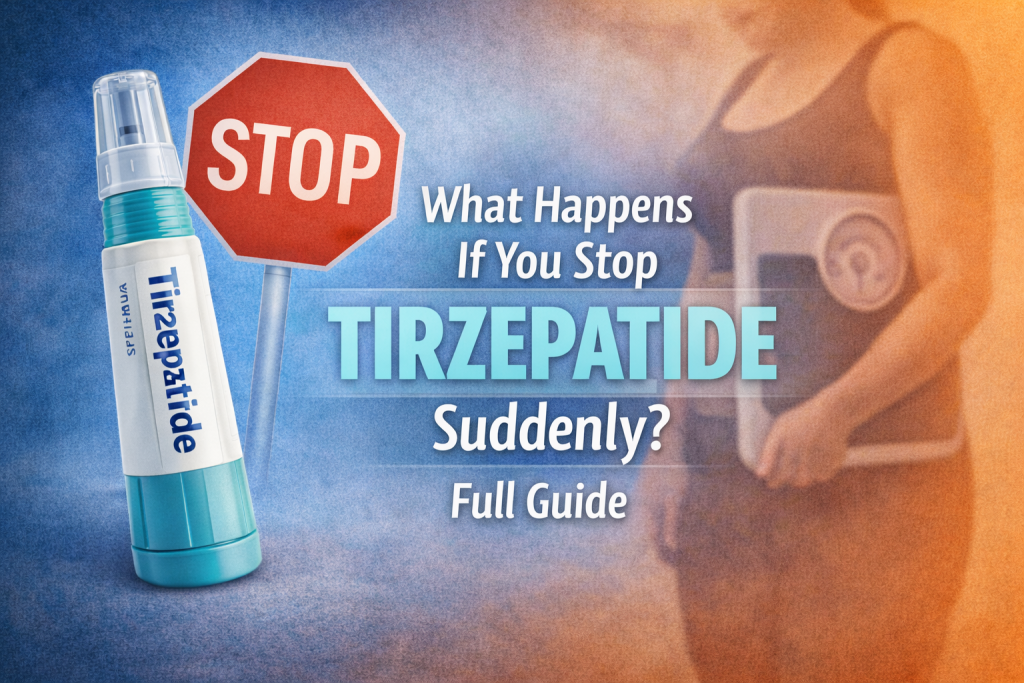
Whatever the reason, it’s important to understand what actually happens when you stop Tirzepatide, especially if you stop suddenly.
The short answer: nothing dangerous for most people, but the effects will start reversing.
Let’s break it down properly.
First Few Days After Stopping
In the first few days, you probably won’t notice much.
Tirzepatide stays in your system for a while, so its effects don’t disappear overnight.
What’s happening behind the scenes:
- The medication is still active in your body
- Appetite control is still partially in place
- Blood sugar regulation remains stable
At this stage, everything feels more or less the same.
After 1 to 2 Weeks: Appetite Starts Coming Back
This is where the shift begins.
As the medication leaves your system:
- Hunger gradually increases
- Cravings start returning
- You may feel less full after meals
This can feel subtle at first, but it builds.
A lot of people notice they’re thinking about food more often again.
After 3 to 4 Weeks: Noticeable Changes
By this point, most of the medication’s effects are gone.
You may notice:
- Appetite is back to pre-treatment levels
- Portion control becomes harder
- Old eating habits start creeping in
This is where people often struggle if they haven’t built strong habits during treatment.
Will You Gain the Weight Back?
This is the big concern.
The honest answer: it’s possible, but not guaranteed.
Weight regain depends on what happens after stopping.
If you go back to the same eating patterns as before, weight gain is very likely.
If you’ve built better habits, you may be able to maintain your results, at least partially.
Why Weight Regain Happens
Tirzepatide doesn’t just help you lose weight. It actively changes how your body regulates hunger.
When you stop:
- Appetite hormones return to baseline
- Hunger signals increase
- Calorie intake often goes up
This isn’t a lack of discipline. It’s biology.
Are There Any Withdrawal Symptoms?
This is something people worry about, but generally:
- There are no classic “withdrawal” symptoms
- No dependency in the traditional sense
However, you might notice:
- Increased hunger
- Lower satiety
- Slight drop in energy due to dietary changes
These are more about losing the medication’s effect than actual withdrawal.
Should You Stop Suddenly?
In most cases, stopping Tirzepatide doesn’t require a strict taper like some medications do.
But that doesn’t mean stopping abruptly is ideal.
A more thoughtful approach is better if possible.
A Smarter Way to Come Off
If you’re planning to stop, it helps to prepare.
Things that make a big difference:
- Gradually improving your diet before stopping
- Increasing protein intake
- Building a simple exercise routine
- Being mentally prepared for increased hunger
Think of it as transitioning rather than quitting.
When Stopping Might Make Sense
There are valid reasons to stop:
- You’ve reached your goal weight
- Side effects are difficult to manage
- You’re switching to another treatment
- Cost or availability is an issue
The key is doing it in a controlled way rather than impulsively.
When You Should Be Careful
You may want to be more cautious if:
- You have diabetes or blood sugar concerns
- You’ve lost a significant amount of weight
- You haven’t built stable eating habits yet
In these cases, stopping without a plan can make things harder.
Final Thoughts
Stopping Tirzepatide suddenly isn’t usually dangerous, but it does come with a clear trade-off.
The appetite control, reduced cravings, and steady progress you experienced won’t stick around on their own.
If you go in prepared, you can manage the transition well.
If you don’t, it can feel like everything is slipping backwards.
At the end of the day, Tirzepatide is a tool. What happens after you stop depends on how you use that tool while you’re on it.